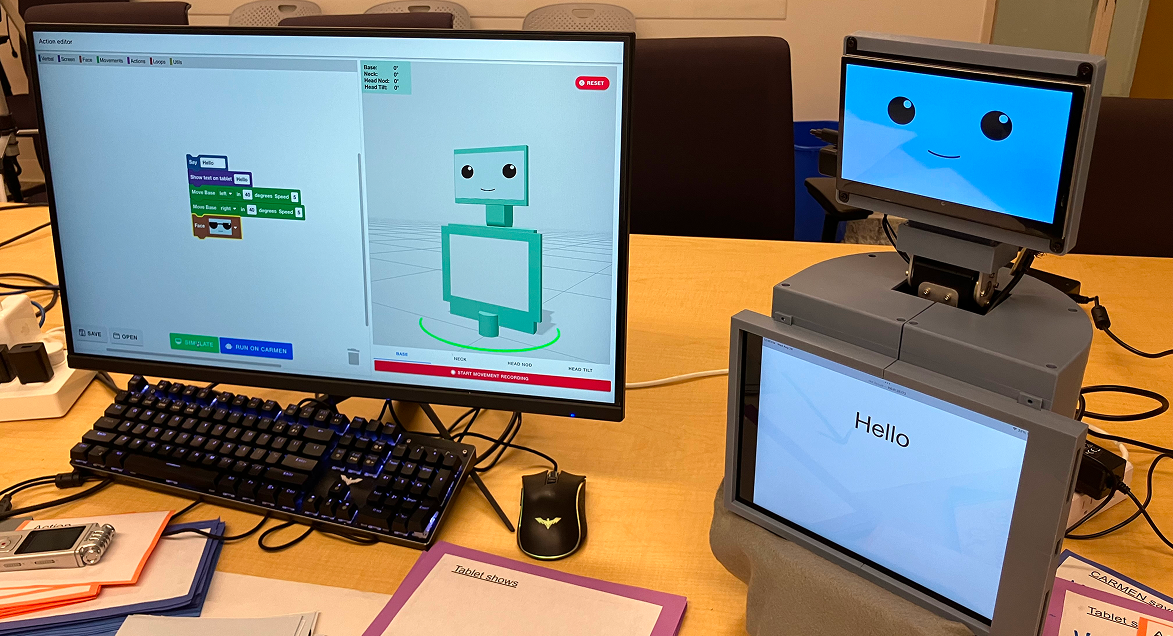
Overview
Prior HRI work has used participatory design approaches to include people with cognitive impairments in the design of robots.
However, there haven't been many tools designed for people with mild cognitive impairments (MCI) or early stage dementia to create their own programs for robots.
We designed a programming framework called PODER to include people with cognitive impairments in the design and development of complex behaviors for robots.
In this study, participants designed behaviors for how they imagined the robot to respond to different scenarios.
Then, they programmed those behaviors on the robot and iterated on their designs.
PODER System
PODER (PrOgramming framework to Develop Robot behaviors) includes scaffolding strategies, the programming tool, and both the physical and digital robot to show the robot actions.
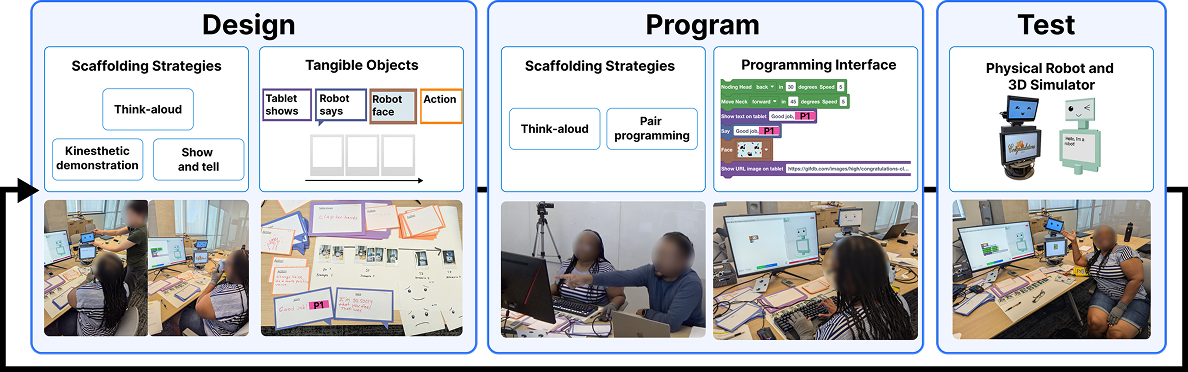
Participants would design robot behaviors, using verbal descriptions of how the robot should move and paper blocks representing different actions on the PODER interface. The participant would program the robot with their own design. Scaffolding strategies such as thinking aloud and pair programming were used to faciliate programming the robot and navigating the programming interface tool. Participants could run their program and see if there were any changes they wanted to make to their design.
Results
Development & Personalization
Many participants expressed feeling confident after the experience learning to program this robot. It also changed some participants' perception of the robot, enabling them to envision how they can use the robot to personalize technology to their interests.
Participants had many ideas for additional features for the robot such as adding games to the robot and adding customization features to add sound effects or family photos on the robot.
Participant Engagement
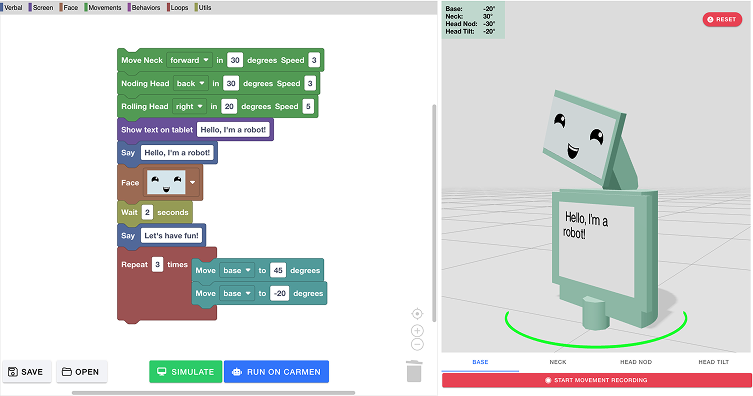
Participants had very positive reactions to the programming interface and verbally expressed that they enjoyed using the tool and would like to use it in the future.